MP Rochefort Hails New Measures to Make Groceries and Other Essentials More Affordable in Nipissing – Timiskaming

(OTTAWA, ON) — Pauline Rochefort, Member of Parliament for Nipissing—Timiskaming is pleased Canadians — and her constituents — will see some relief when it comes to affordability thanks to a major announcement by the Government of Canada.
“Lowering costs means putting real, practical support into the hands of people here in Nipissing—Timiskaming,” said MP Rochefort. “From helping families save on groceries and everyday essentials, to strengthening local food producers and supply chains across Northern Ontario, these measures give Canadians more room to breathe and more power to shape their future. Together, we are building a stronger, more resilient, Canada.”
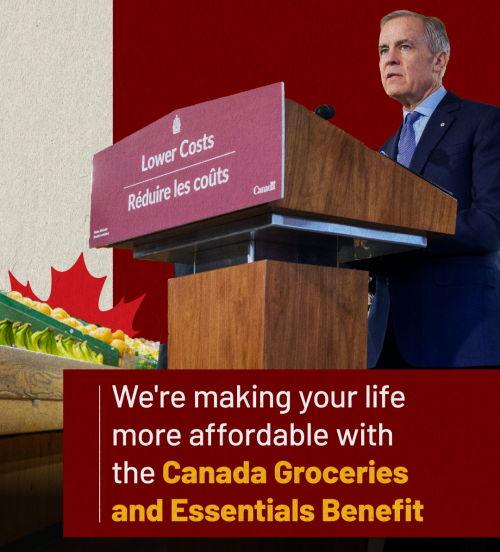
Earlier today, Prime Minister Mark Carney introduced new measures to make groceries and other essentials more affordable. To bring down your costs, Canada’s new government is:
- Putting more money back in Canadians’ pockets
- The government is introducing the new Canada Groceries and Essentials Benefit, formerly the Goods and Services Tax (GST) Credit, increasing its amount by 25 per cent for five years beginning in July 2026 (subject to Royal Assent).
- In addition to that, the federal government is providing a one-time payment, equivalent to a 50 per cent increase this year.
- Combined, this means that a family of four will receive up to $1,890 this year, and about $1,400 a year for the next four years; and a single person will receive up to $950 this year, and about $700 a year for the next four years.
- The new Canada Groceries and Essentials Benefit will provide additional, significant support for more than 12 million Canadians.
- Tackling food insecurity, supporting producers, and strengthening supply chains
- The government is setting aside $500 million from the Strategic Response Fund to help businesses address the costs of supply chain disruptions without passing those costs on to Canadians at the checkout line.
- For the same purpose, the government will create a $150 million Food Security Fund under the existing Regional Tariff Response Initiative for small and medium enterprises and the organisations that support them. Funding will be delivered through agencies such as FedNor, providing targeted support for Northern Ontario.
- To lower the cost of food production, the government is introducing immediate expensing for greenhouse buildings. This allows producers to fully write off greenhouses acquired on or after November 4, 2025, and that become available for use before 2030. This measure supports increased domestic supply and investment in food production over the medium-term.
- To ease immediate pressures with food banks, the government is providing $20 million to the Local Food Infrastructure Fund. This supports food banks and other national, regional, and local organisations to deliver more nutritious food to families in need.
- To tackle the root causes of food insecurity, we are developing a National Food Security Strategy, one that strengthens domestic food production and improves access to affordable, nutritious food.
- This strategy will also include measures to implement unit price labelling and support the work of the Competition Bureau in monitoring and enforcing competition in the market, including food supply chains.
The federal government is focused on building a stronger economy to create more career opportunities and higher wages. In parallel, we are bringing down costs to make life more affordable. That’s how we’ll empower more Canadians with greater certainty, security, and prosperity now, and into the future.
That’s how we Build Canada Strong.
 X
X